Change Is Good, Right?

In a world where people are gravitating toward ever growing MegaPixel counts, my wife and I have begun a leap into the micro four thirds world. For those who don’t know it, it’s a smaller sensor mirror-less camera system. It has some very positive merits to be sure, size and weight being big ones for us. Anyone who has traveled with a bag of full frame gear can relate. The 4/3 high quality sensors combined with some great and useful features makes them a perfect fit for some.

My camera body arrived yesterday and I’m excited to begin the journey!

Don't Be Afraid To Explore New Ideas

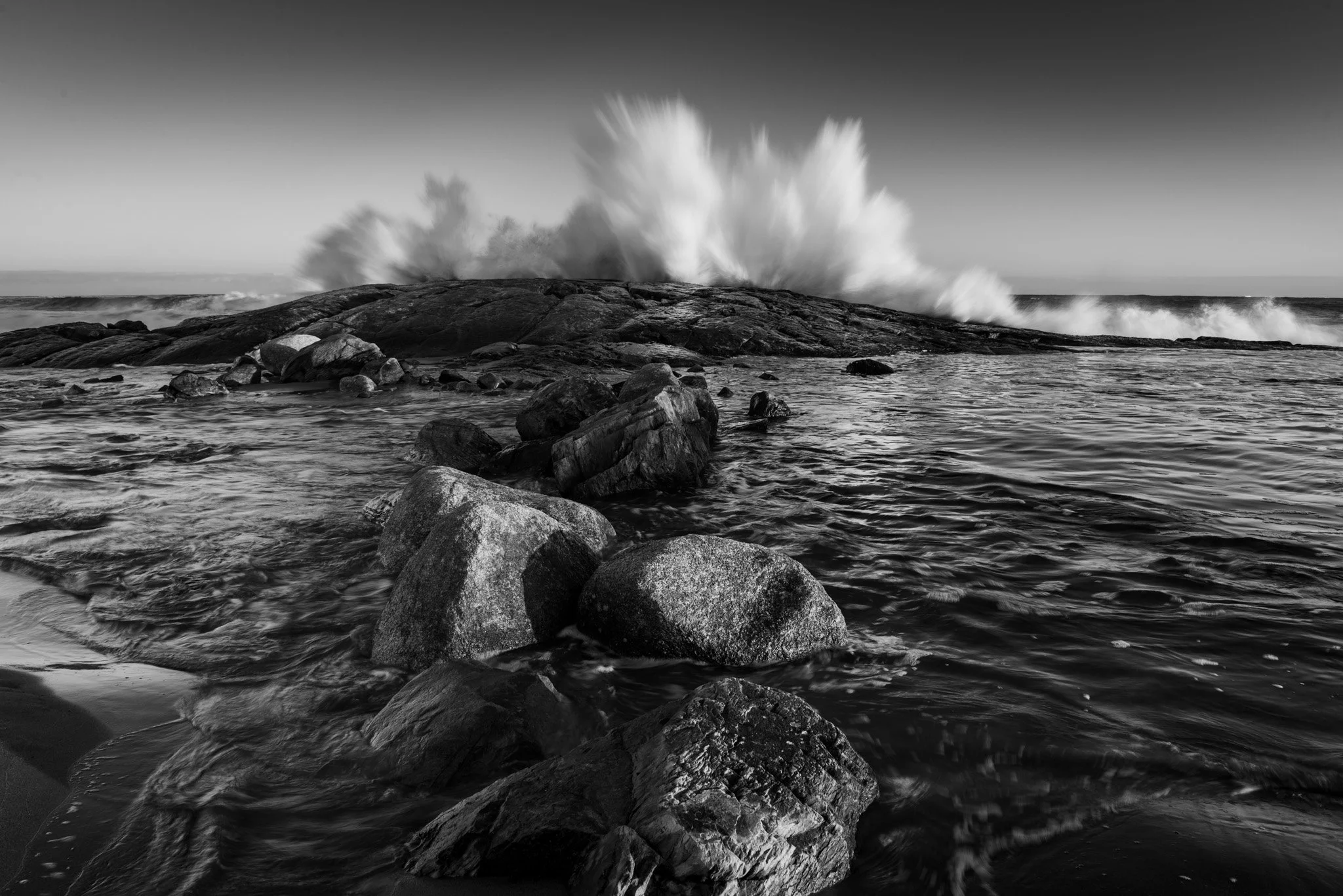
The colour version of this image hung in our livingroom for some time.I liked it initially but it didn’t last. I began to look at it and pick it apart, find more and more things that I didn’t like about the photograph. Sometimes that happens, you have to live with art for a bit sometimes I find, then you discover what you really think. In this case, the colours weren’t sitting well with me and I eventually got to the point that I needed to take it down. Judi had a great shot she made in Alberta that took it’s place. :)

Recently, I began playing around with the image as a black and white and it began to speak to me once again. If the colours were what I felt didn’t work, take it away and see what you’re left with. In this case I think the colour was standing in the way of the true interest in the photograph.
Comments and opinions always welcome.

Is Artificial Intelligence Evil?

As AI is growing in popularity there are many ideas as to what, if any, difference it will make to photography in general and maybe your photography in particular. First of all, there are more than one type of AI in the photography world. One is AI assisted tools such as the masking and many other tools in most editing apps these days. The other is the generative type where it will create whole images for you from prompts you type in. The AI assisted tools, I think are just fine, they are designed to help or to save time and I’m all for that. They don’t change photography any more than traditional editing does. That isn’t always the case with generative AI.

Some think AI will kill photography but I think that is a bit of a stretch. I think it will hurt certain genres, but in general, there will still be plenty of photography happening. AI will never be able to shoot a wedding or sporting event or any form of event photography for that matter, nor will it be useful for any news related images. That said, there will be genres that will be affected, some already are very much. I don’t think it will have any affect on your hobby shooting whatever that may be. Pro photographers may have to change their direction a bit depending on what they do but I think if you’re a portrait photographer you’ll be pretty safe.

Some landscape photographers have expressed concern that people would now be able to sit at a computer and type in prompts and get photos of iconic locations like Niagara Falls, The Grand Canyon, or The Canadian Rockies without ever going to any of these places. Why on earth would they want to do that? Where is the satisfaction in that? I recently went to The Canadian Rockies and experienced Moraine Lake in person. I got there in the middle of the night and slept in the car till dawn just to shoot sunrise at Canada’s most photographed lake. I assure you, there is no AI on this planet that can give the same thrill as seeing and experiencing that kind of beauty up close and personal. Landscape photographers like to get out in nature, hike, find locations and shoot actual photographs. Who said you can’t get no satisfaction?!

The biggest place that AI will change photography for me personally is how I look at YOUR work. These days I often question photographs as to their process. Sometimes I see something that just looks “off” and I question it. I know for a fact that there are lots of folks out there using generative AI as a staple tool. There is a popular YouTuber who actually did a whole video about how they use it routinely to alter images that they don’t like or maybe missed the mark in camera. That seems to me to be a case of using AI as a crutch to cover for laziness.

Why should I print Photographs?

In the beginning, photography was a print media for the most part. People shared their photographs as prints, they put together photo albums, we all had them in our homes and from time to time, we would flip through them remembering the times or the people in the photographs. With the switch over to digital, a few things changed with it. People began taking more pictures for one thing, but more importantly, they don't print very much any more. Your town or city has definitely seen a decline in places where you can even print images these days. There is something about actually holding a photograph in your hands and viewing it that just doesn't compare to any computer screen or even projection of the image. To me, the print is the finished product of photography.

Another interesting thing to keep in mind is that some storage medias aren’t going to last forever. For instance, CD/DVDs are subject to possible degradation, especially the cheaper ones. All the more reason to print up some photos! My wife and I have begun to print some special examples for our walls. It looks great and we get to remember great times via these prints. We also have been known to give away a print or two as well. I strongly recommend printing some images, big or small to enjoy, after all that’s what we produce them for, isn’t it?